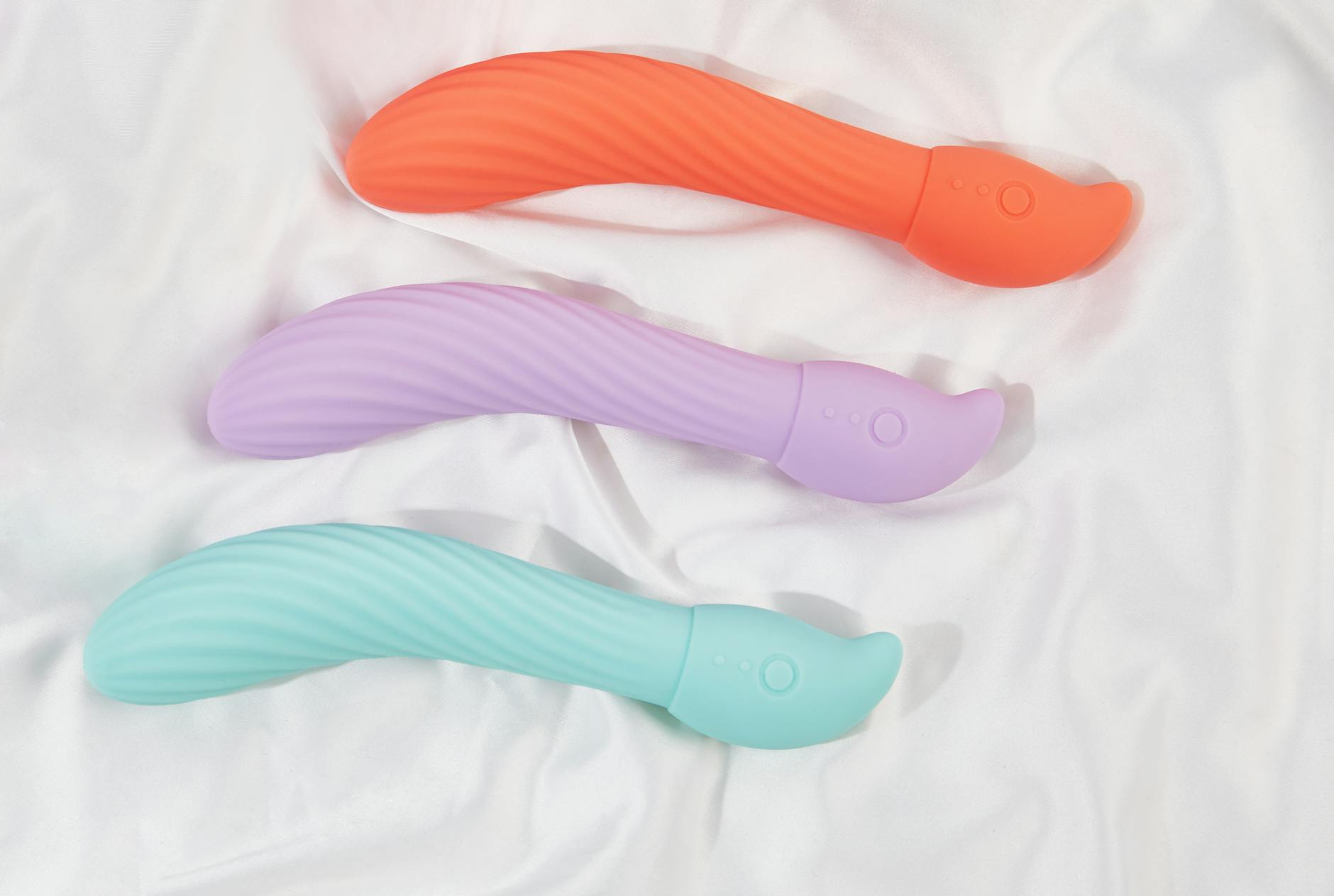
You've been using your lemon vibrator for six months. It felt incredible at first. Now something's shifted. The buzz doesn't quite land the same way, or the stimulation feels softer, or maybe you need a longer warm-up to get going. Your first thought is probably that you've broken it. You haven't. What you're noticing is real, and it's worth understanding.
There are three things that change with a vibrator over time: the motor's output, your body's sensitivity to it, and the physical condition of the toy itself. All three are completely normal. And all three are fixable.
Here's the thing about pleasure and repetition: your body is incredibly smart. When you use the same stimulus in the same way over and over, your nervous system learns to filter it out slightly. It's the same reason you stop noticing a constant background noise, or why a song you loved gets less thrilling the hundredth time you hear it. Your brain is designed to detect novelty and ignore predictability.
This is called sensory adaptation, and it's not a flaw in your lemon vibrator or in you. It's how your nervous system stays efficient. The motor in your toy isn't actually producing less vibration. Your receptors are just saying "yeah, okay, we know this one already."
The fix is almost always simple: change something. Different pattern, different rhythm, different angle, different intensity level. If you've been using pattern 3 at medium speed, jump to pattern 5. If you usually start on the clitoris, try starting on the inner lips and working inward. The novelty alone often restores that initial sensation.
One of the most overlooked reasons a toy starts feeling "different" is a shift in what you're using on or with it. Six months ago, you might have been using a silicone-based lube. You've switched to water-based. Or you're using less of it. Or you're not using any and relying on natural lubrication.
With air-pulse lemon clitoral vibrators especially, lubrication affects not just comfort but the actual sensation. The suction cup creates a seal, and that seal works differently depending on what's between your skin and the toy. Silicone lube feels thicker and warmer. Water-based feels lighter and cooler. Both are valid. But if you've unconsciously switched, your body registers it as the toy feeling different.
Try this: use a proper amount of the lube you started with, warm it slightly between your fingers, and notice what comes back. Often that's all it takes.
Silicone doesn't degrade quickly, but it does experience micro-changes over six months. If you're washing it regularly with soap and water (which you should be), the surface stays pristine. But if you've been storing it in direct sunlight, in extreme heat, or with harsh chemicals nearby, the silicone can lose elasticity.
You'll notice this as a slight change in feel. The toy might feel a touch softer, or the suction cup might not create quite the same seal it used to. The vibration motor itself doesn't wear out easily. Lem vibrators are built to last years. But the external material can soften or harden with improper storage.
Check your storage setup. Keep your lemon vibrator away from direct heat, sunlight, and humidity spikes. A cool, dark drawer or a small storage pouch in your nightstand is ideal. If you've been leaving it on a sunny windowsill or in a hot bathroom, move it. Often the sensation will improve within a few uses as the silicone re-stabilizes in a cooler environment.
Six months is still well within the lifespan of a quality vibrator motor. But if you've been charging it constantly or letting it drain completely regularly, the battery's capacity might have dropped slightly. This shows up as reduced vibration strength, especially at the higher intensity levels.
Check your charging routine. A good rule is to charge your clitoral vibrator when it hits 20 percent battery, not when it dies completely. Lithium batteries last longest with regular, moderate top-ups. If you've been draining it to zero and charging it from empty repeatedly, consider switching to a pattern of more frequent, shorter charges. You might also want to try a full charge and a fresh session without any other changes. Sometimes a thorough battery reset is all the motor needs.
Here's something that doesn't get talked about enough: your own body changes throughout the month. If you menstruate, your clitoral sensitivity, arousal speed, and orgasm intensity shift with your cycle. You might feel more sensation just before ovulation and less during the luteal phase. Over six months, you've been through six cycles at least. You might simply be comparing a session from your high-sensitivity week to one in your lower-sensitivity week.
If you're tracking anything, notice when you usually feel the strongest sensations and when you feel like you need to work a bit harder. Your lemon vibrator isn't changing. You are, and that's totally normal.
There's a difference between "it feels different" and "it's not working." If your toy is completely dead, physically cracked, or producing a burning smell or odd noise, that's a real failure. But if the vibration is still present, the toy still charges, and the sensation is just subtly different, you almost certainly don't have a mechanical problem.
One test: try your toy at its highest intensity setting, full charge, with fresh lubricant and a completely different angle or pattern from your usual routine. If you feel strong vibration and sensation in that setup, the motor is fine. What shifted was your routine or your nervous system's adaptation to it.
You don't need to replace your lemon clitoral vibrator after six months. You need to surprise your nervous system. Try these one at a time to see what brings back that initial spark.
Switch intensity patterns mid-session. Start on pattern 1 and work up to 8, instead of camping on your favorite. Shift positioning. If you usually use the toy head-on, angle it slightly or position it to one side. Change lubrication type or amount. Try a day when you're not on your usual cycle day. Take a week off and come back to it. Use it during a different time of day when your energy is different.
One of these will almost certainly feel like you've just gotten a new toy.
Not significantly. A quality vibrator motor like those in Hello Nancy's lemon clitoral vibrators are built for years of use. What changes is your nervous system's response to repeated stimulation, not the vibrator's output. Sensory adaptation is normal and reversible with variation.
Silicone can soften slightly with age, heat exposure, or certain storage conditions. Check that you're storing your toy in a cool, dark place, away from direct sunlight and extreme temperatures. Silicone that softens due to heat often re-stabilizes when stored properly. If it's genuinely damaged or the suction no longer works at all, that's worth investigating, but minor softening is usually environmental, not permanent.
Absolutely. Start with the basics: clean it thoroughly, charge it fully, use proper lubrication, and try a completely different pattern or approach. Most "worn out" toys are just experiencing sensory adaptation in the user. Changing your routine, not the toy, usually fixes it.
A well-maintained lemon clitoral vibrator can easily last 3-5 years or longer. If the motor is still vibrating, the charge still holds, and there's no physical damage, it's not time to replace it. Focus on care instead. Regular cleaning, proper storage, and moderate charging habits extend the life significantly.
Yes, often due to sensory adaptation rather than actual motor degradation. Your nervous system learns to filter out familiar sensations. Try switching patterns, intensity levels, or timing. Also check your battery. If you've been letting it drain completely and recharging repeatedly, battery capacity might have declined slightly. Adjust your charging routine and test again.
Store it in a cool, dry place away from direct sunlight and heat sources. A nightstand drawer, storage pouch, or dedicated toy bag works well. Avoid humid bathrooms if possible, and don't store it near heat vents or windows. Keep it clean and dry before storing. These simple practices preserve both the silicone and the motor's performance over years.
Your lemon vibrator probably hasn't changed as much as your relationship with it has. After six months of regular use, you've built up a pattern. You know what to expect. Your nervous system has learned to predict the sensation. The antidote isn't a new toy. It's curiosity. Change one variable. Try a pattern you've avoided. Use it at a different time. Pair it with something new. Your toy is the same as it was. But you don't have to be.
If you have questions about caring for your toy or want to explore new ways to use it, reach out at contact form link. We're here to help your pleasure stay exactly where you want it.
Sensory adaptation and neurological habituation research draws from decades of human sexuality studies. For more detailed guidance on toy maintenance and performance longevity, visit our Care guide or explore Product care tips. If you're new to lemon vibrators and want to understand how air-pulse stimulation compares to traditional vibration, our Air-pulse vs traditional vibration guide covers the science in detail.