Here's the thing nobody tells you: having kids doesn't just reduce your sex drive. It fundamentally reorganizes your nervous system. Your brain goes into protective mode. Survival mode. And survival mode is not interested in pleasure.
You're touched out from holding small humans all day. You're cognitively depleted from making ten thousand micro-decisions. You're running on sleep that wouldn't qualify as sleep by any reasonable definition. And then your partner looks at you at 9 p.m. with that look, and you feel... nothing. Not resistance. Just nothing.
This isn't in your head, and it's not a you problem. Three things happen at once.
First, oxytocin gets rerouted. Oxytocin is the bonding hormone. When you have a newborn, your entire oxytocin supply gets channeled into attachment to that child. There's not much left in the tank for partnered pleasure. Some of this comes back as kids age, but not all of it, not right away.
Second, your cortisol stays elevated. Parenting is a continuous, low-level stressor. Your cortisol doesn't spike and drop like it does with other stressors. It stays up. Elevated cortisol inhibits dopamine and suppresses the neural pathways associated with desire. You don't feel turned on because your nervous system is still on alert.
Third, your identity fragments. You're not just yourself anymore. You're a mother or father. That role is all-consuming. When pleasure requires you to step outside that role and back into your own body, it feels weird, selfish, or even impossible. Many parents report feeling like their pre-parent self is someone they used to know but can't quite access.
If your therapist or partner has suggested you just need to prioritize sex more, they mean well but they're missing the actual problem.
You can't desire something your nervous system isn't ready to experience. Forcing sex when you're depleted doesn't rebuild desire. It reinforces the idea that sex is another obligation, another demand on an already empty tank. That makes it worse, not better.
What you need is a gentle re-entry into your own pleasure. Something that doesn't require performance, presence, or coordination with another person. Something that reminds your body that sensation exists outside of the context of caregiving.
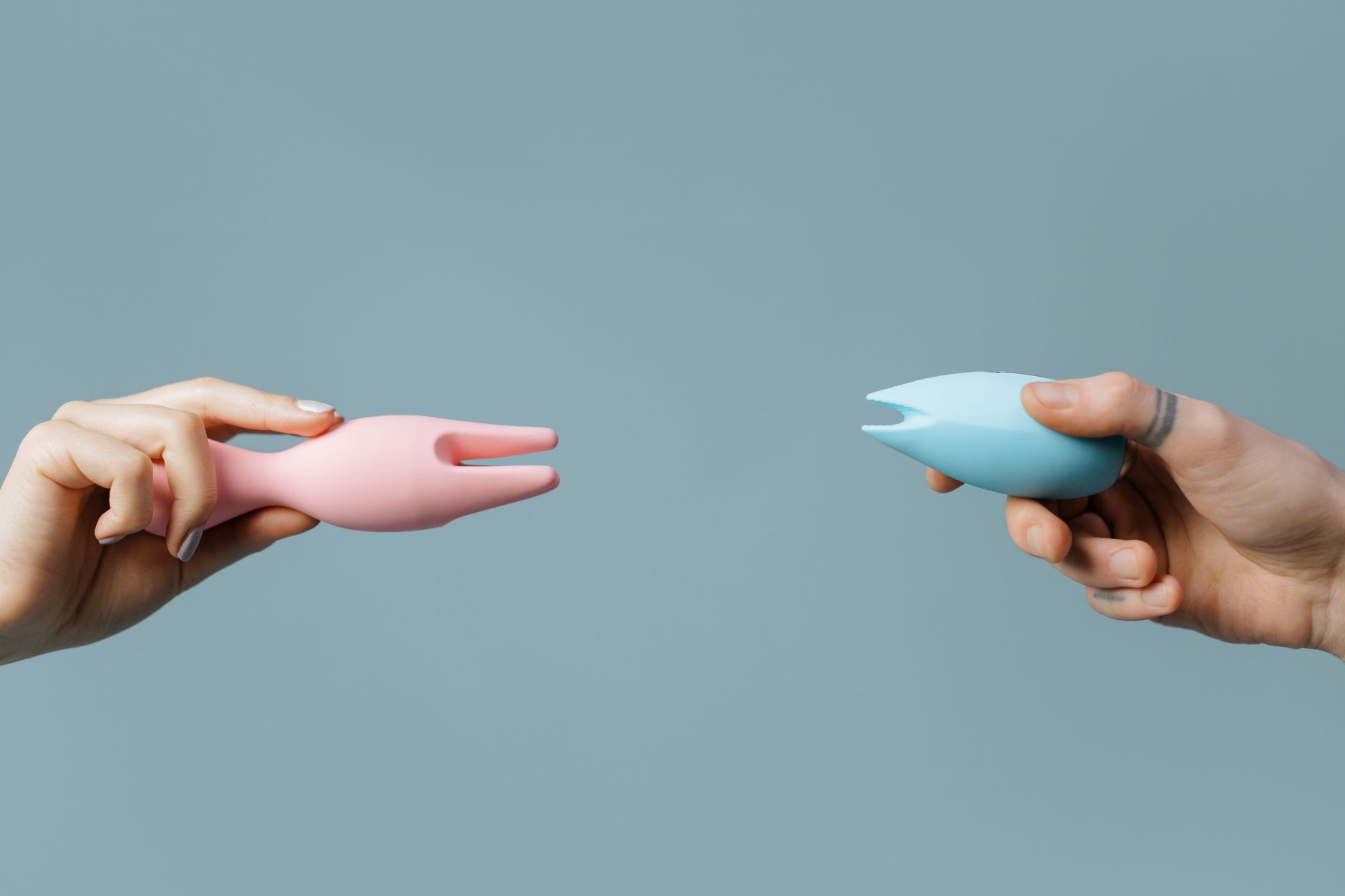
That's where The Lem Vibrator changes the equation.
Most vibrators require direct friction. They ask your body to stay engaged, build arousal, and hit a target. If you're already depleted, that feels like work.
The Lem uses air-suction technology. It doesn't vibrate the clitoris. It creates a gentle suction and release pattern that stimulates the surrounding tissue and the nerve endings. The stimulation is broader, less direct, and paradoxically, easier for your nervous system to process.
Here's what parents specifically report: it takes less mental effort. Your brain doesn't have to stay in performance mode. You can literally do this while your mind is somewhere else (the laundry, the grocery list, whatever), and your body will still respond. The suction pattern is forgiving. It doesn't demand perfect positioning or constant engagement.
Let's be realistic. You don't have 45 minutes of uninterrupted time. You have 10. Maybe 15 if the bedtime routine goes smoothly.
Here's what actually works:
Steal shower time, not bedroom time. The shower is already private. You're already undressed. The water covers sound. Clip The Lem to the shower edge or hold it. Five to eight minutes. That's enough. You're not trying to have a full experience right now. You're reminding your body that pleasure exists.
Do it in the morning before everyone wakes up. Yes, this sounds impossible. But 20 minutes before your house explodes is radically different from 9 p.m. when you're already exhausted. Your nervous system hasn't entered full depletion mode yet. Morning arousal is also physiologically easier to access.
Stop thinking of it as foreplay. You're not building toward anything. You're not supposed to orgasm if it doesn't feel good. This is pure sensory reclamation. Use settings 1 and 2 on The Lem. Slow. Exploratory. No goal.
The point is not to have orgasms. The point is to reconnect with the fact that your clitoris still exists and still feels good. That singular fact will shift something in your nervous system. It will remind your body that you are not just a parent. You have your own sensation.
If you're partnered, here's the conversation I recommend:
"I'm rebuilding my sex drive. Right now, that means solo time. Not instead of us. Alongside us. I need my nervous system to remember that pleasure is something I want for me, not something I do for you. Once I reconnect with that, we can reconnect with each other."
That's not a rejection. That's a repair strategy. Most partners get it when it's framed that way.
Many parents find that once they've done a few weeks of solo practice, they're actually more interested in partnered sex. Not because they're trying harder. But because their nervous system has shifted out of survival mode enough to remember what desire feels like.
If your youngest is under three, assume this will take months, not weeks. Your brain is still in intensive caregiving mode. That's not something you push through. You work with it.
Start with solo practice twice a week. Just reminding your body. Use The Lem on the lower settings. No pressure to feel anything specific. You're building a new neural pathway that says "pleasure is something I get to have for myself."
After four to six weeks of solo practice, most parents feel a shift. Not a sudden surge of desire. Just a thaw. A willingness. An "oh, I remember this" moment.
Once that happens, you can start thinking about partnered intimacy again. But the shape will probably be different than it was before kids. You might want more foreplay, more control, more time to warm up. That's not a problem to solve. That's just what your body needs now. How to Use a Lemon Vibrator When You Feel Rushed During Sex goes deeper into that territory if you're navigating partnered dynamics.
Here's what I see in my practice over and over: parents who have lost desire often say things like "I don't recognize myself" or "I'm just a mom/dad now."
That's the real block, not the exhaustion.
Using The Lem solo is not just about pleasure. It's an act of reclaiming yourself. It's a physical reminder that you are a person separate from your parenting role. Your body has needs that have nothing to do with anyone else's wellbeing. Your pleasure matters. That matters to your identity.
Many parents report that rebuilding solo pleasure actually strengthens their relationships, because they stop resenting their partners for a desire they don't feel. They stop treating sex as an obligation. They start treating it as something they actually want. That's a completely different dynamic.
Once you've got solo practice established, partnered sex becomes a choice, not a duty. Here's what works:
Start small. Not full sex. Hand jobs or oral sex, which are less about your arousal and more about sensation and connection. Use The Lem together if it feels good. Many partners enjoy watching, and the suction stimulation is completely different from what hands alone can do.
Or start with mutual masturbation. You use The Lem while your partner touches themselves or watches. This removes the pressure for synchronized arousal. You're both getting your own pleasure. It's radically easier when you're already depleted.
It's not date nights, though those help. It's not trying harder or reading books about spicing things up. It's this: your nervous system needs to exit survival mode.
Survival mode exits when you feel safe, rested enough, and like you're not the only one responsible for everyone else. That's a structural problem that usually needs structural solutions: more childcare, less work, partner contribution increasing. Those things matter.
But while you're working on the structure, reclaiming your own pleasure through something like The Lem speeds up the nervous system shift. You're literally telling your body "we're going to pause the caregiver role and just be a person with sensation for a few minutes." That message compounds. After weeks of it, your nervous system starts to believe that pleasure is possible again.
Start with twice weekly. That's enough to signal to your nervous system that this is a regular part of your life, not a special occasion. If you're doing this in the shower, it might happen more often just by happenstance, and that's fine. The goal is consistent practice, not intense practice.
This is normal, especially if you're very depleted. You might feel physical sensation but no emotional arousal, no warmth, no anticipation. Keep going. After a few weeks, the emotional piece usually catches up. Your body is just reminding itself how to respond. That takes time.
Yes, though I usually recommend solo practice first for the psychological piece. When a partner uses it, there's an inherent dynamic of performance or receiving. Solo use is purely for you. That distinction helps reset the nervous system. But if partnered play feels safer, start there and add solo practice later.
Often the opposite. Once you remember what pleasure feels like, you're more interested in sharing it. You stop seeing sex as an obligation and start seeing it as something you want. That makes partnered sex better, not worse.
Battery compartment locks are available separately. Keep it in a drawer with a simple lock in your bedroom, not the bathroom. Teach older kids that certain drawers are private adult spaces. It's the same conversation you'd have about privacy and boundaries.
This usually comes from insecurity that you don't need them. The framing that helps: "I'm rebuilding my own pleasure so I can bring that back to our relationship." Most partners shift once they understand this is not a replacement. It's a bridge back to desire. How to Introduce a Lemon Clitoral Vibrator to Your Partner has deeper strategies if you need them.
Parenthood fundamentally changes your relationship with desire. That's not fixable. It's just the reality of what happens to your body and brain when you're responsible for keeping small humans alive.
But lost desire doesn't have to be permanent. It usually just needs time, safety, and a way to reconnect with your own body separate from your caregiving role. The Lem Vibrator gives you that specific tool. You're not fixing your libido. You're reminding your nervous system that pleasure is still possible, still yours, still worth your time.
Start with twice weekly. Set a timer if you need to. Give yourself permission to feel nothing at first. After a month, something will shift. You'll feel it coming back. Not the same as before kids. Something different. Something that's integrated with who you are now.