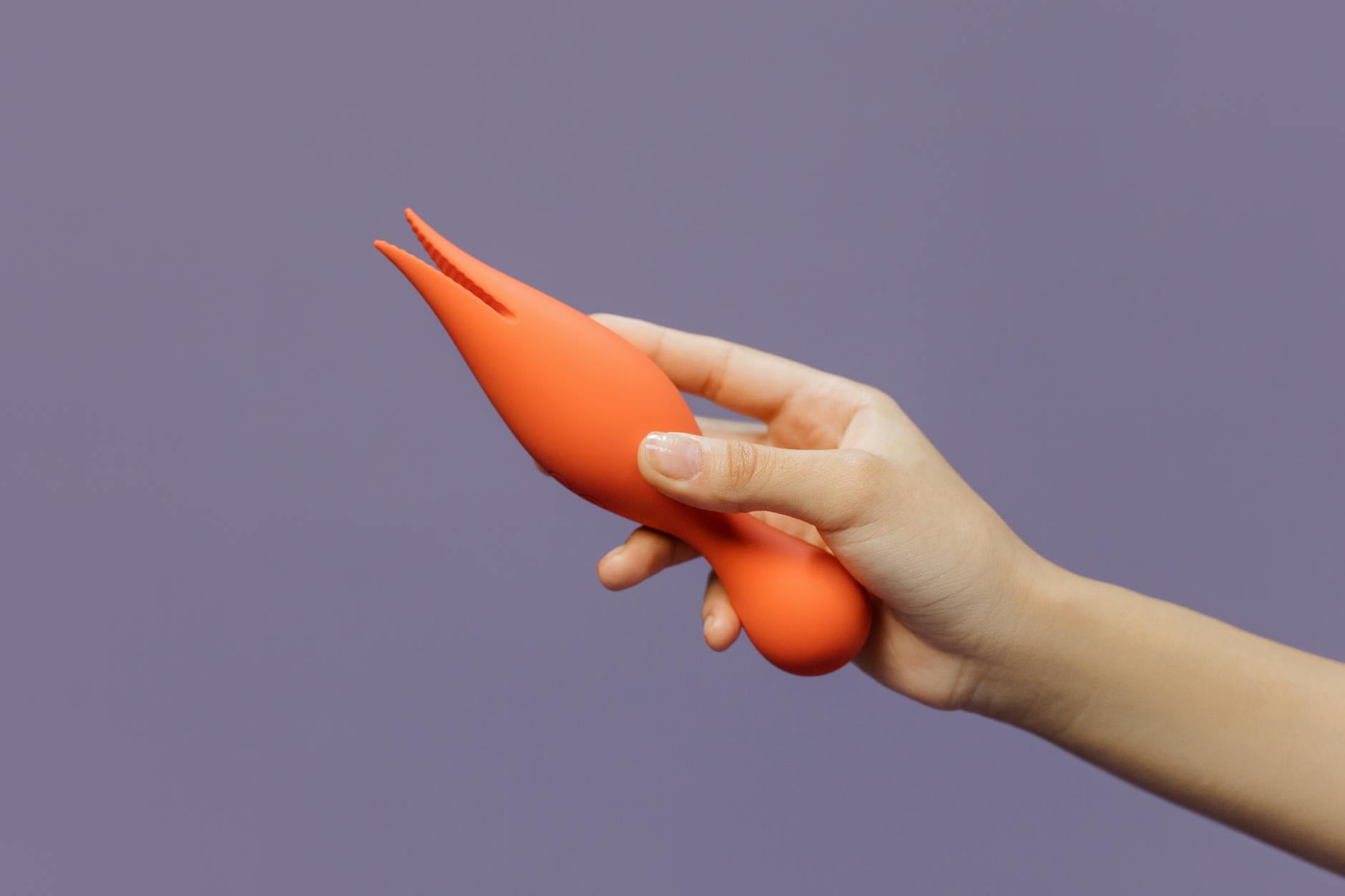
How to Introduce a Lemon Clitoral Vibrator to Your Partner
The conversation doesn't have to be weird. Here's a framework that actually works, why your partner might surprise you, and how a lemon suction vibrator can deepen your connection instead of threatening it.
You already know how to tell your partner you want something. You do it all the time. You tell them you want to try a new restaurant, book a vacation, change where you're sitting on the couch. Introducing a lemon clitoral vibrator is genuinely not harder than any of those conversations. The only difference is that your brain has decided it is, because it involves sex, and that's where all the shame and fear gets concentrated.
Here's what I hear in my practice over and over. Partners (often men) worry that a vibrator means they're not enough. That you're telling them they've failed at sex. That you're checking out of the relationship. All of that is rooted in a misunderstanding about how pleasure works.
A lemon vibrator is not a replacement for your partner. It's a tool that lets you feel things differently. Different is not better or worse. It's different. You might need a fork for pasta and a spoon for soup, and that doesn't mean the fork failed at soup. Your partner's hands and a lemon suction vibrator create different sensations, and using both makes the experience richer.
The other thing partners worry about, less often but real: that you're suddenly going to want things they can't provide. That you'll get a taste of intense stimulation and become unsatisfiable. Statistically, the opposite happens. People who use clitoral vibrators in partnered sex report higher satisfaction with their partners and stronger emotional connection. This is not a coincidence.
Don't ambush them. Don't sit down for a "serious talk." Don't present it as a problem you're solving. Instead, weave it in naturally.
The low-pressure opener. "Hey, I found this thing I want to try, and I think we could have fun with it together." That's it. You're not saying you need it. You're not saying they're failing. You're saying this could be fun.
The curiosity angle. If you're worried they'll feel judged, lead with curiosity about their pleasure. "I want to see what happens if we use this on you" or "I wonder if this would change things for me when we're together." This shifts the frame from complaint to exploration.
The timing. Have this conversation outside the bedroom. Not right before sex. Not right after. When you're both relaxed, neither of you is tired, and there's no pressure to perform. Sunday morning over coffee. Tuesday night after dinner. Neutral ground.
First, understand that a bad reaction is usually fear talking, not truth. Here's what to do:
Don't defend yourself immediately. Let them sit with it for a second. "I can tell this feels like a big thing. I want to understand what you're worried about." This opens the conversation instead of shutting it down.
Answer specifically. If they say "I don't think you should need that," you could say, "I don't need it to be satisfied. I want to experience different sensations. Isn't that what you feel when you watch porn or read something that turns you on?" Normalize that external stimuli can be part of partnered sex without meaning anything's wrong.
Offer a compromise you actually want. "How about we look at it together first? No pressure to use it right now." Often, fear shrinks when the object becomes concrete and less scary. A silicone lemon clitoral vibrator doesn't look like a threat once it's in the room.
Set a boundary if needed. If they're repeatedly hostile or trying to control what you do with your own body, that's a different problem, and it's not about the toy. That's about respect, and it deserves its own conversation or maybe a conversation with a therapist.
Let's say they said yes, or they're curious enough to try. Here's how to make the experience feel natural instead of awkward.
Start with you alone. The first time you use it, don't wait for them to suggest it or invite them. Use it solo, enjoy it, and then mention it casually afterward. "That was really nice." This demystifies it and makes it way less weird when you use it together.
When you do use it together, let them be involved in choosing how. "Do you want to use it on me, or do you want me to?" Give them agency. A lemon suction vibrator often works really well when your partner uses it on you because they can watch your response and adjust based on what they see. That's intimate, and it can actually bring you closer.
After you've used it together once or twice, check in. "Did you like that? What felt good?" This isn't a formal debrief. It's just making sure you're both enjoying it. If your partner loved it, great. If they felt uncomfortable, find out why. Maybe they felt awkward watching. Maybe the sound was distracting. Maybe it felt too fast. These are all solvable problems.
Some partners take longer to warm up. That's fine. You don't need their enthusiastic participation from day one. How to Use a Lemon Vibrator When Your Partner Wants Penetrative Sex Only covers the situation where they're not interested in the toy itself but you still want to incorporate it. That's completely workable.
This isn't sentiment. This is what the research shows. Couples who explore pleasure tools together report better communication, higher sexual satisfaction, and stronger emotional intimacy. The conversation itself builds intimacy. You're saying "I want this experience with you." You're being vulnerable. You're negotiating. Those are the skills that make long-term relationships work.
A lemon clitoral vibrator is just the vehicle. The real thing happening is that you're prioritizing your pleasure, and you're inviting your partner to be part of that. Most partners, once the initial shock wears off, find that really hot.
The toy is just an object. The conversation is where the real connection happens.
But also take it as information. If your partner is so uncomfortable with your pleasure that they won't even discuss it, that's something worth understanding. That could be a boundary issue. That could be insecurity. That could be a fundamental mismatch in values. Those are real, and they deserve real attention. A toy isn't going to fix those. A real conversation might.
No. Most people find that having a lemon suction vibrator as part of partnered sex actually feels better. You're experiencing more sensation, so you're more present. You're probably also more aroused, which changes everything about the experience for your partner. They can feel the difference in your body, in how you're responding. It's not weird. It's better.
No. Your partner wanting to explore pleasure isn't a comment on you. It's a comment on wanting more pleasure. Those are completely separate things. Imagine if your partner asked to try a new position because they wanted something different. Would you be offended? Probably not. This is the same thing with slightly more nervousness attached.
That almost never happens. What does happen is that people integrate the toy into their sex life and keep everything else they were already doing. You're not losing anything. You're adding something. If you're worried about this, have that conversation directly: "I want to make sure that using a vibrator doesn't mean you don't want me to touch you." Most partners will tell you that's not how it works.
Then you're thinking about this as competition instead of collaboration. A lemon clitoral vibrator takes pressure off your partner to orgasm through penetration alone, which means you can relax too. You don't have to be perfect. You can just be present. That's actually easier.
No. Love and sexual exploration are not the same thing. You can love someone and still want to try new things. You can love someone and use a toy. These are not in conflict.
Frame it as addition, not subtraction. "I want to try something new" is not the same as "Our sex life is broken." One is curiosity. One is complaint. Use your words carefully. Say, "I've been curious about this and I think we could have fun with it." Not, "I need this because you're not doing enough."
Then that's their choice. You can be present. You can watch. You can still be part of it even if you're not the one holding the lemon vibrator. Partnership doesn't mean doing everything exactly the same way every time.
Your partner might surprise you. They might be enthusiastic. They might want to explore more. They might ask questions. They might touch the toy and ask why it's shaped that way, or what the suction feels like. Curiosity from your partner is a really good sign. It means they're not threatened. They're interested.
And if they're interested, you both get to have more fun. That's not nothing.
If you need guidance on how to approach the conversation, or if things feel stuck after you've tried, that's what therapists are for. There's no shame in that. Most of the couples I work with who get stuck on the toy question are actually dealing with something deeper about communication or trust. A good couples therapist can help you figure out what that is. You don't have to solve it alone.
Start with the conversation. Be honest. Be kind. Be brave. Your pleasure matters. And most partners, when they understand that, want to be part of it.