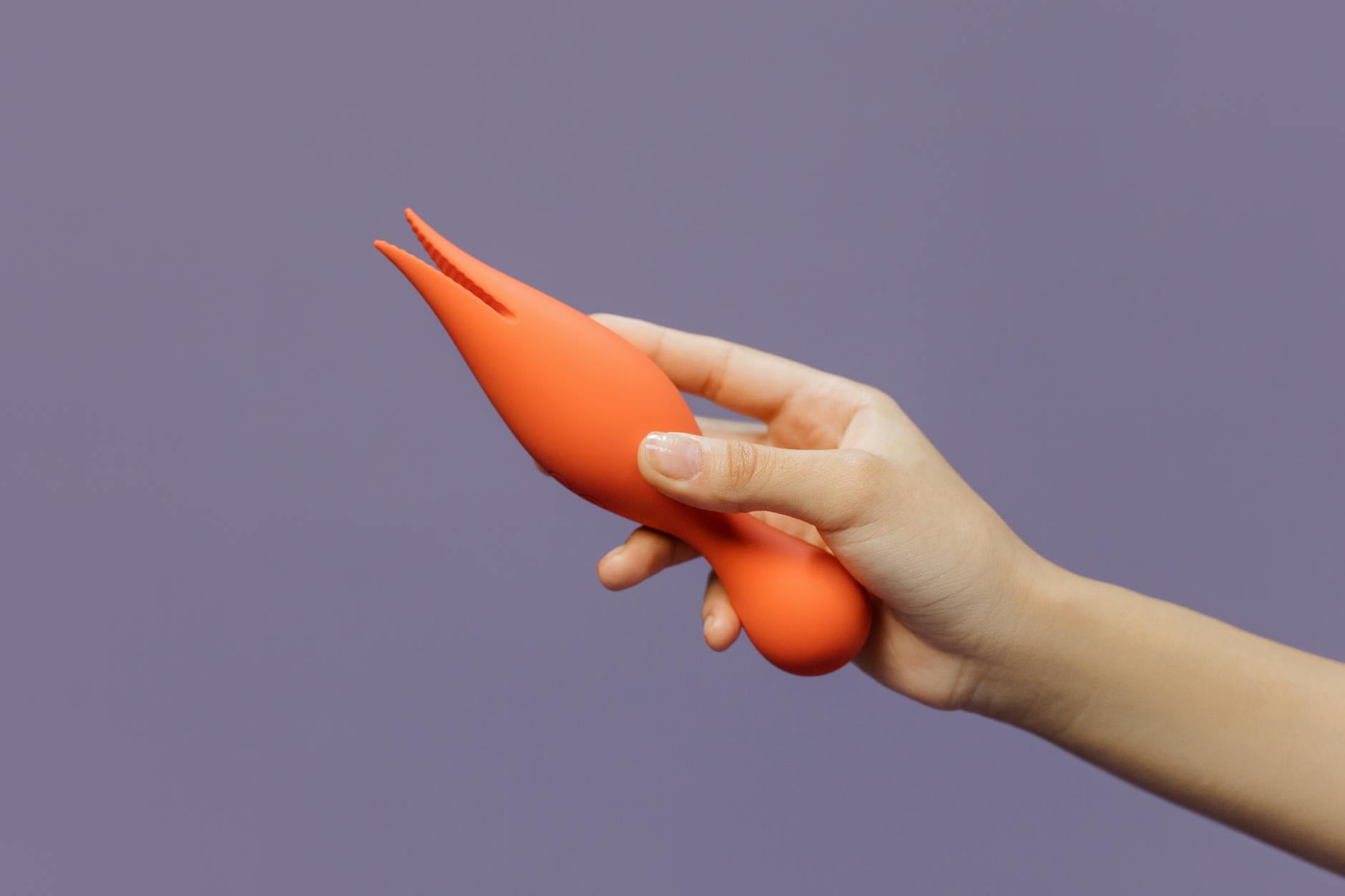
How to Use a Lemon Vibrator When Estrogen Levels Drop After Menopause
Your body is changing. Your capacity for pleasure isn't. Here's exactly how a lemon clitoral vibrator works with lower estrogen to deliver sensation you might have thought was gone.
Estrogen doesn't create pleasure. It creates the conditions for pleasure. When it drops during menopause, those conditions shift. Tissue thins. Lubrication changes. Blood flow to the clitoris takes longer to build. But here's what doesn't change: the neural pathways that make sensation possible, the clitoral structures that respond to stimulation, or your brain's capacity to feel intensely good.
This is where a lemon clitoral vibrator becomes genuinely useful. Not as a workaround, but as a tool that's actually better suited to how your body works now.
First, vaginal and clitoral tissue becomes thinner and less elastic. This isn't damage. It's a natural shift. The upside: thinner tissue can actually be more responsive to certain kinds of stimulation because nerve endings sit closer to the surface.
Second, natural lubrication decreases. The vagina produces less of the fluid that traditionally signals arousal. Again, not a flaw. It just means external lubrication becomes a useful addition, not an emergency.
Third, blood flow to the genitals becomes slower to activate. This means arousal takes longer to build. Most people need 15 to 25 minutes of warmup instead of 5. That's not a problem once you know it's coming.
A lemon vibrator handles all three of these shifts because air-suction technology doesn't depend on the same physiology as friction-based stimulation. It creates sensation through gentle suction and rhythmic pulsing rather than direct mechanical pressure. For post-menopausal bodies, that's often more comfortable and more effective.
Most vibrators rely on sustained vibration against sensitive tissue. When tissue is thinner and more easily irritated, that can feel overwhelming or even tender. A lemon clitoral vibrator uses a different mechanism. It gently surrounds the clitoris and creates waves of suction rather than direct pressure.
This matters for several reasons. Suction doesn't require the same level of direct friction that can feel raw on delicate tissue. It distributes sensation across a larger area rather than concentrating it at a single point. And because it works through suction, you can use lower intensity settings and still feel significant sensation. Start at pattern 1 or 2 on a lem vibrator. Most people find they need less power, not more, as they age.
Water-based lubricant becomes your essential companion. Use it generously. This isn't about being broken. It's about working with your body's current chemistry. A quality lubricant replaces the natural lubrication your body made more readily before, and it changes everything about comfort.
One of the biggest shifts after menopause is how arousal builds. Your clitoris doesn't engorge as quickly. Blood flow takes time. Sensation can feel muted at first. This is temporary. It changes if you give it room to change.
Budget at least 15 minutes before you introduce the lemon vibrator. Touch yourself. Use your hands. Let your body recognize what's coming. This isn't foreplay in the traditional sense. It's priming the nervous system, warming up blood flow, and giving your body permission to respond at its own pace.
Once you turn on the lem vibrator, start at the lowest setting. Many people expect they'll need to climb toward higher intensities. In reality, the opposite often happens. As arousal builds, sensation becomes more acute. What felt subtle at intensity 1 becomes quite intense by intensity 3. Give your body 3 to 5 minutes at each level before moving up. You might find you never leave level 2.
Here's something worth knowing: the angle of contact changes everything, especially as tissue shifts. Your clitoris may sit differently now. Its angle relative to your body may have changed slightly. This means the positioning that worked before might feel off now.
Experiment. Hold the lemon clitoral vibrator directly against the clitoris. Then angle it slightly to one side. Then slightly upward. Small adjustments create massive differences in sensation. You're not looking for the perfect angle forever. You're discovering what feels good today, in this body, at this moment.
Many people find that as estrogen drops, they prefer sustained, stationary contact over motion. Instead of moving the vibrator in patterns, hold it still and let the suction work. Or move it very slowly. Your body will tell you what feels right.
If you're using a lem vibrator with a partner, communication matters more than it ever did. What felt automatic before now requires words. Tell them what you're discovering. Invite them to feel the difference. This can actually deepen intimacy because it requires presence and attention rather than assumption.
If you feel tenderness or irritation after using any vibrator, the issue is almost always one of three things: insufficient lubrication, too much intensity, or too long a session.
Address lubrication first. Reapply water-based lube. Try a heavier formula. Some people find coconut oil works beautifully for external use, though it's not compatible with silicone toys. Check your vibrator's material first.
If lubrication is solid and you're still feeling irritation, dial back intensity. Spend time at level 1. Let your body acclimate. Sensitivity often increases after menopause, which means you need less stimulation, not more, to reach orgasm.
Duration also matters. A 10-minute session might be perfect. A 30-minute session might be too much. Start shorter. You can always continue. Your body will tell you when it's had enough.
Orgasm after menopause often feels different. It might be less full-body and more localized. It might build more slowly. It might feel shallower or more intense depending on how your pelvic floor is responding to lower estrogen.
None of these variations are wrong. They're just different. Many people report their most satisfying orgasms come after menopause, once they let go of expecting the experience to feel exactly like it did before. A lemon vibrator can help with this transition because it often produces a different type of orgasm than friction-based vibrators. Some people describe lem vibrator orgasms as more waves of sensation than the peak-and-release pattern they knew before.
If you're not reaching orgasm, that's also normal and fixable. It usually takes patience and often requires a combination of longer warmup time, lower intensity, and willingness to explore what feels good now rather than chasing what felt good then.
If sex becomes painful, that's worth a conversation with a menopause-informed GP or gynaecologist. Genitourinary syndrome of menopause (GSM) is real and treatable. Topical estrogen creams can help within weeks. Systemic hormone therapy is another option if it's right for you.
If desire has completely vanished and hasn't returned after a few months of exploration, testosterone therapy is worth discussing with a specialist. It's prescribed conservatively in many places, but it exists and changes things for the right person.
Your body after menopause is not a diminished version of your body before. It's a different version. Different doesn't mean less capable of pleasure. It often means more capable once you understand the new rules. A lemon clitoral vibrator bridges that transition because it works with your shifting physiology rather than against it. You're not trying to force your body back into its previous pattern. You're discovering what pleasure looks like now.
Absolutely. A lemon clitoral vibrator often works better after menopause than it did before because suction-based stimulation is gentler on thinner tissue and doesn't require the same blood flow response that friction-based vibrators depend on. Start at lower intensity levels and use plenty of water-based lubricant. Most people find lemon vibrators particularly effective in post-menopausal years.
Yes. Estrogen influences clitoral tissue thickness, natural lubrication, blood flow to the genitals, and how quickly arousal builds. When estrogen drops, the same vibrator may feel different. Sensation might feel muted at first, requiring longer warmup time and lower intensity. Thinner tissue can also feel more sensitive to direct friction, which is why air-suction vibrators like lemon clitoral vibrators often feel more comfortable during this transition.
Start at pattern 1 or 2. Most people find they need less intensity, not more, during and after menopause. As arousal builds, sensation becomes more acute, so what feels subtle at the beginning becomes quite noticeable as your body warms up. You can always increase intensity, but starting low protects against overstimulation and discomfort. Many people find their sweet spot is levels 1 through 3 and rarely venture higher.
Completely normal. Orgasms often feel different after menopause. They may be more localized, build more slowly, or feel like waves rather than peaks. Some people experience them as more intense. These variations aren't problems. They're just what happens when your body's chemistry shifts. Many people report discovering new sensations and new preferences for the first time after menopause. A lemon vibrator can help you explore these changes without judgment.
Budget at least 15 minutes of non-vibrator touch and arousal before introducing the lemon clitoral vibrator. This allows blood flow to build naturally and primes your nervous system. Once you turn on the vibrator, move slowly through intensity levels, spending 3 to 5 minutes at each level. Rushing this process often means missing the sensation that's building. Your body works on its own timeline now, and it's slower than it was before. That's not a setback. It's an opportunity to stay present.
Many people find that lemon vibrators help them reach orgasm after menopause, especially if friction-based vibrators stopped working or started feeling uncomfortable. The suction mechanism is gentler on changing tissue and often more effective at building sensation gradually. That said, if you're struggling with orgasm, the issue is usually one of: insufficient warmup time, too much intensity too quickly, or hormonal shifts that need clinical support. A conversation with a menopause-informed doctor can help identify which it is.
Post-menopausal pleasure is real. It's different, and it requires you to learn your body again. A lemon clitoral vibrator is built for exactly this transition. If you're ready to explore sensation in your changing body, this is the tool designed for it. Questions about how to get started? Reach out at /contact and let's talk about what might work best for you.